



All Products
-
Lignosulfonate Lignin
-
Sodium Lignosulfonate
-
Calcium Lignosulfonate
-
Potassium Lignosulfonate
-
Sodium Lignosulfonate Liquid
-
Magnesium Lignosulfonate
-
Ammonium Lignin Sulfonate
-
Ferrochrome Lignosulfonate
-
Polycarboxylate Superplasticizer Powder
-
Polycarboxylic Acid
-
Sodium Naphthalene Formaldehyde
-
Lignosulfonate Dispersant
-
Dispersing Agent MF
-
Dispersing Agent NNO
-
Sodium Gluconate
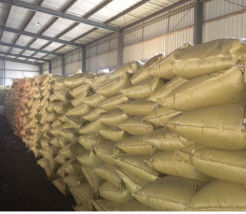
Dry Matter 93 Percent Min Calcium Lignosulfonate Suitable Additive for Animal Feed Pellet Binder and Concrete Admixtures

| Place of Origin | CHINA |
|---|---|
| Brand Name | ATET |
| Certification | ISO |
| Minimum Order Quantity | 1T |
| Price | 150USD/T--650USD/T |
| Packaging Details | 20KG/BAG,25KG/BAG,50KG/BAG,500KG/BAG,550USD/BAG,600KG/BAG |
| Delivery Time | 7-10 DAYS AFTER PAYMENT |
| Payment Terms | T/T, L/C, D/A, D/P, Western Union, |
| Supply Ability | 3000T/MONTH |
Product Details
| Wood Slurry | Wood Slurry | Water Insoluble Matters | ≤1% |
|---|---|---|---|
| Dry Matter | 93%min | Cas | 8061-52-7 |
| Lignosulphonate | 55%min | Solid Content | ≥93% |
| Productname | Calcium Lignosulfonate | Grade | Agriculture Grade |
| Highlight | Calcium Lignosulfonate animal feed binder,Dry Matter Calcium Lignosulfonate additive,Calcium Lignosulfonate concrete admixture |
||
Product Description
Product Description:
Calcium Lignosulfonate is a versatile and widely used chemical product derived from the sulfite pulping process of wood. It is also commonly known as Calcium Lignin Sulfonate and plays a crucial role in various industrial applications due to its unique chemical properties. This product is primarily obtained from wood slurry, which ensures a natural and sustainable source material. With a minimum dry matter content of 93%, Calcium Lignosulfonic Acid provides excellent consistency and performance in its applications.
The appearance of Calcium Lignosulfonate is typically a brown powder or granules, making it easy to handle, transport, and incorporate into different formulations. Its physical form contributes to its versatility, allowing it to be used in both liquid and solid states across various industries. The product contains a minimum of 55% lignosulphonate content, which is the active component responsible for its binding, dispersing, and dust suppressing capabilities.
One of the primary uses of Calcium Lignosulfonate is as a dust suppressant. Calcium Lignosulfonate Dust Suppressant is highly effective in controlling dust in mining, construction, and other industrial environments. By binding fine particles together, it reduces airborne dust, thereby improving air quality and reducing health hazards associated with dust inhalation. Its ability to form a durable, water-resistant layer on surfaces makes it ideal for long-lasting dust control in harsh outdoor conditions.
The chemical identity of Calcium Lignosulfonate is well recognized, with the CAS number 8061-52-7. This ensures that users can easily identify and verify the product for regulatory compliance and quality assurance purposes. The consistent chemical composition and high purity make this product reliable for various industrial processes, including concrete admixtures, animal feed binders, and metal casting.
In the concrete industry, Calcium Lignosulfonic Acid acts as a plasticizer and dispersant, improving the workability and strength of concrete mixes. It helps in reducing water content while maintaining flowability, which results in higher quality concrete structures. This application highlights the importance of Calcium Lignin Sulfonate in construction and infrastructure development, where durability and performance are critical.
Furthermore, Calcium Lignosulfonate is utilized in animal feed as a pellet binder, enhancing the durability and quality of feed pellets. Its natural origin and non-toxic nature make it safe for use in agricultural applications. Additionally, it serves as a dispersant in various industrial processes, aiding in the uniform distribution of pigments, dyes, and other additives in formulations.
Due to its biodegradable and environmentally friendly characteristics, Calcium Lignosulfonate is preferred over synthetic alternatives in many applications. Its origin from wood slurry ensures that it is sourced from renewable materials, contributing to sustainable industrial practices. This aligns with the growing demand for eco-friendly products in the global market.
In summary, Calcium Lignosulfonate is a high-quality product characterized by its brown powder or granules appearance, a minimum of 93% dry matter, and at least 55% lignosulphonate content. Derived from wood slurry and identified by CAS number 8061-52-7, it serves as an essential ingredient in dust suppression, concrete admixtures, animal feed, and various other industrial applications. Its role as a Calcium Lignosulfonate Dust Suppressant is particularly valuable in mitigating dust-related issues in industrial environments, promoting safer and cleaner working conditions. The product's natural origin, effectiveness, and versatility make it an indispensable material across multiple sectors.
Features:
- Product Name: Calcium Lignosulfonate
- CAS Number: 8061-52-7
- Appearance: Brown Powder or Granules
- Dry Matter Content: Minimum 93%
- Also Known As: Calcium Lignosulfonate, Calcium Lignosulfonic Acid
- Derived From: Wood Slurry
- Contains Lignosulfonate of Calcium
- Available in Calcium Lignosulfonate Solution form
Technical Parameters:
| Product Name | Calcium Lignosulfonate |
| Other Name | Calcium Lignosulfonate |
| Grade | Agriculture Grade |
| Wood Slurry | Wood Slurry |
| Lignosulphonate Content | 55% min |
| Dry Matter | 93% min |
| Appearance | Brown Powder Or Granules |
| CAS Number | 8061-52-7 |
| Keywords | CAS 8061-52-7, Concrete Admixture |
Applications:
The ATET Calcium Lignosulfonate, originating from China and certified by ISO, is a high-quality calcium salt of lignosulfonic acid widely used in various industrial applications. With a dry matter content of at least 93% and water insoluble matters not exceeding 1%, this product ensures excellent performance and reliability. Available in multiple packaging options including 20KG, 25KG, 50KG, 500KG, 550KG, and 600KG bags, it caters to diverse customer requirements with a minimum order quantity of 1 ton. The product is competitively priced between 150 USD/T and 650 USD/T, supported by flexible payment terms such as T/T, L/C, D/A, D/P, Western Union, and , with a prompt delivery time of 7-10 days after payment.
One of the primary application occasions for ATET Calcium Lignosulfonate is as a concrete admixture. In the construction industry, it serves as an effective plasticizer and water-reducing agent, improving the workability and durability of concrete while reducing water content. The lignosulfonate calcium salt enhances concrete’s strength and surface finish, making it ideal for large-scale infrastructure projects, residential buildings, and road construction.
Beyond construction, the Calcium Lignosulfonate Solution is extensively used in the animal feed industry as a pellet binder. It helps improve the pellet quality, durability, and feed efficiency, which is vital for livestock nutrition and overall farm productivity. Additionally, this lignosulfonate calcium salt acts as a dispersant in various industrial processes such as dyeing, ceramics, and oil drilling fluids, where it stabilizes suspensions and prevents particle agglomeration.
In agricultural applications, ATET Calcium Lignosulfonate is utilized as a carrier and binder in pesticide formulations, enhancing the effectiveness and adherence of pesticides on crops. Its biodegradability and low toxicity make it an environmentally friendly choice in sustainable farming practices.
With a supply ability of 3000 tons per month, ATET ensures a steady and reliable source of Calcium Lignosulfonate to meet the demands of various industries. The product, also known by the CAS number 8061-52-7, is recognized for its versatility and effectiveness, making it an essential raw material in numerous manufacturing and processing scenarios.
Recommended Products
